Design Concept & Features
Design Concept
Bloomlight is centered around repurposing two key waste materials: leftover 3D printer filament and scrap sheet metal. These materials were chosen not just for their availability in fabrication labs, but for their complementary structural properties.
Why filament? 3D printer filament is a comprehensive material - it is structural, can take on unlimited forms through additive manufacturing, and is readily available as waste in any makerspace. PLA filament offers excellent rigidity for the lamp's base and curved stem.
Why sheet metal? Scrap sheet metal provides the structural integrity needed for the petal lampshade. It can be cut, bent, and soldered into organic petal shapes that both reflect light and give the lamp its distinctive floral silhouette.
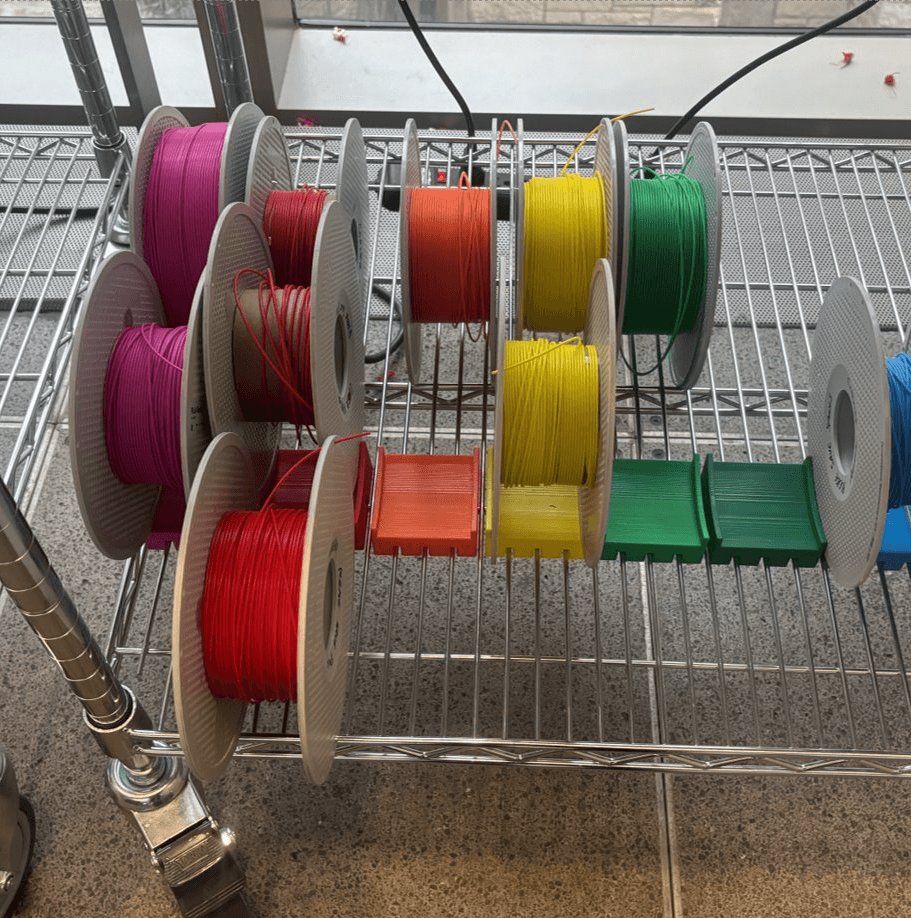
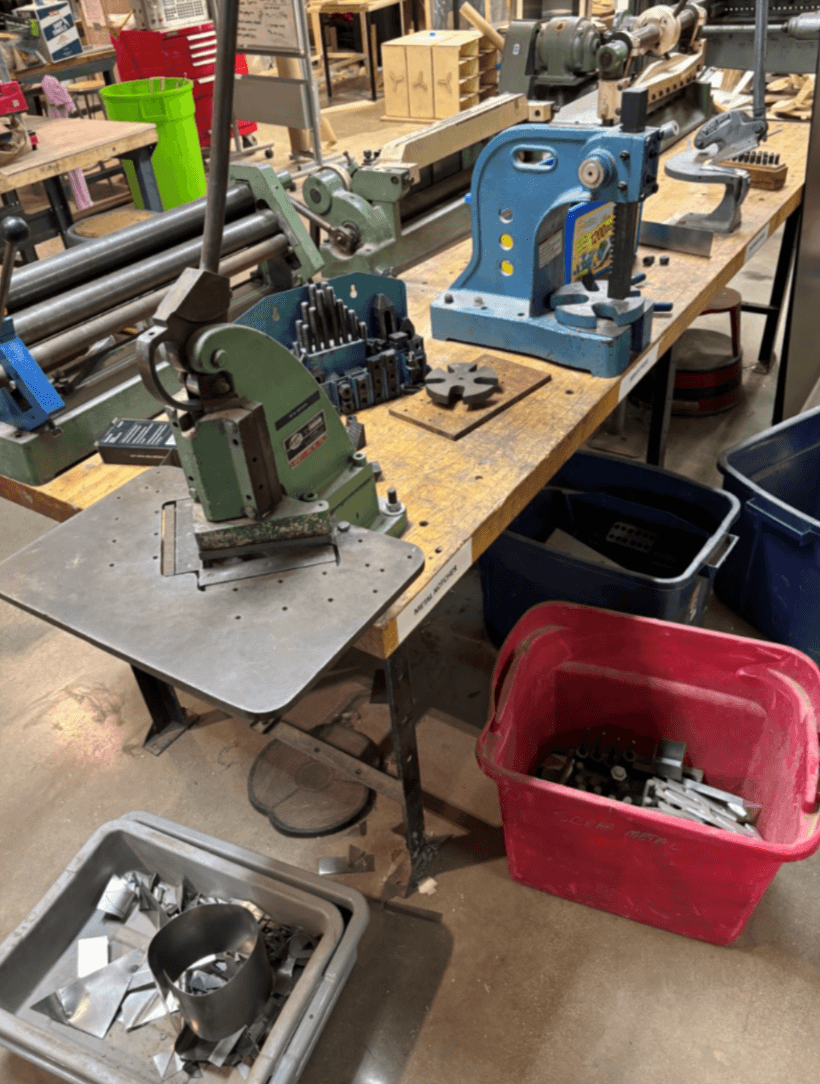
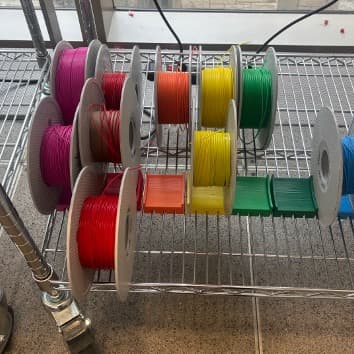
Left: Leftover filament spools in the fabrication lab. Right: Scrap sheet metal collected from workshop offcuts.
Features
Easy to Disassemble
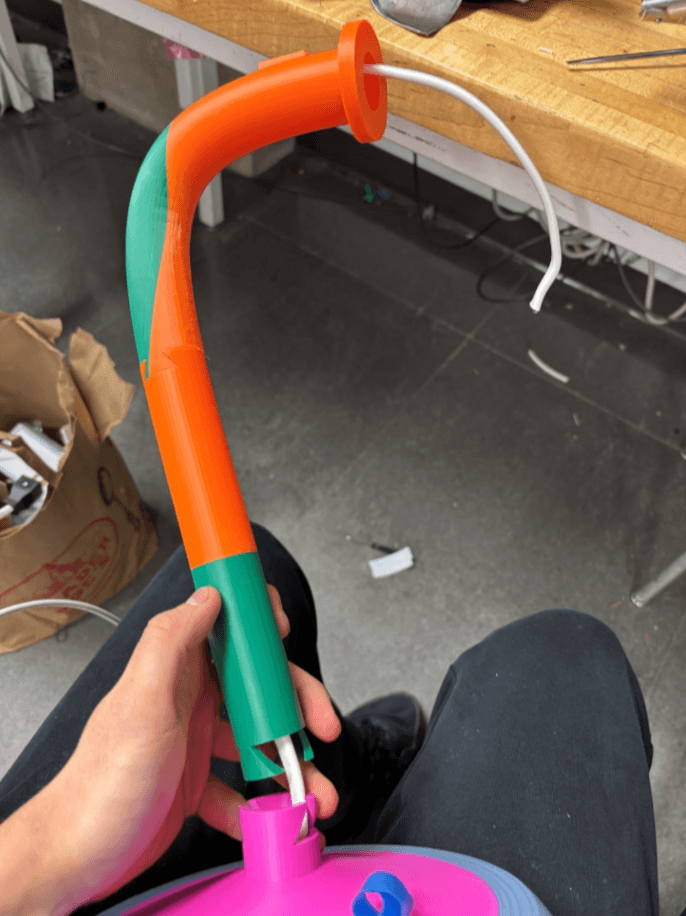
Dovetail connectors ensure effortless disassembly to repair joints or check electrical connections. The lamp uses zero fasteners - all external components are press-fit. The petal cone can be de-soldered to replace individual leaves, making repairs straightforward and keeping the lamp maintainable over its full lifetime.
Structurally Sound
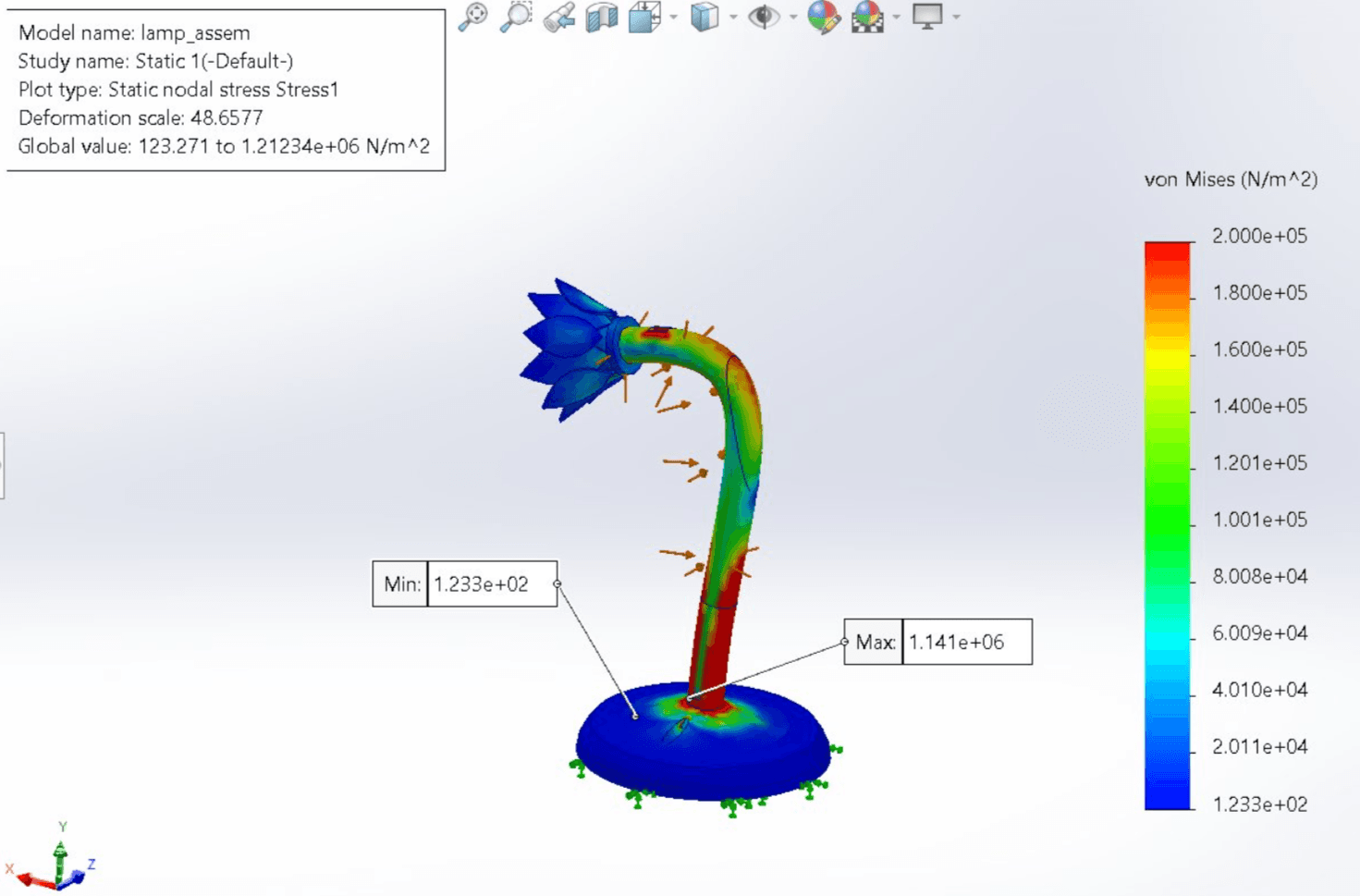
The 3D-printed PLA structure has a yield strength of around 60 MPa, giving BloomLight a factor of safety of 52.5 for a 20 lbf load. Finite element analysis confirmed that the stem and base can comfortably handle well beyond normal desk use, ensuring the lamp remains stable and durable through everyday interactions.
Artistic Statement
BloomLight showcases that tougher, rugged materials can create art. The project exposes users to advanced and unconventional manufacturing methods - combining 3D printing, metal cutting, welding, and soldering into a single cohesive piece. The result is a lamp that is as much a conversation piece as it is a functional workspace tool.
Assembly
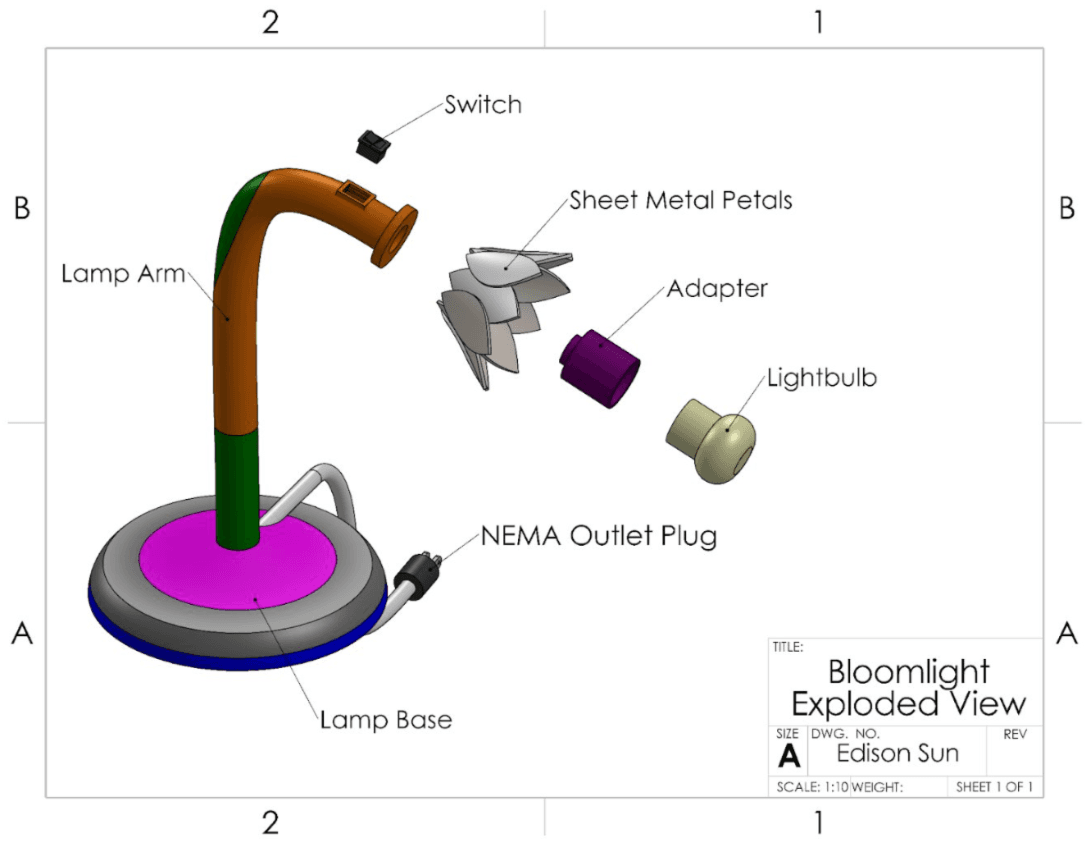
The following instructions cover the complete construction process for Bloomlight, combining 3D printing, metalworking, and electrical assembly. The total assembly time is approximately 4 hours and requires intermediate familiarity with fused deposition modeling printing, sheet metal manipulation, and high-voltage electrical circuits.
We recommend splitting the assembly into mechanical and electrical portions separately, as these sections are independent until final assembly. Be especially cautious when working with high voltage. Ensure no current flows through open circuits until the lamp is fully assembled.
3D Print the Mechanical Arm & Base
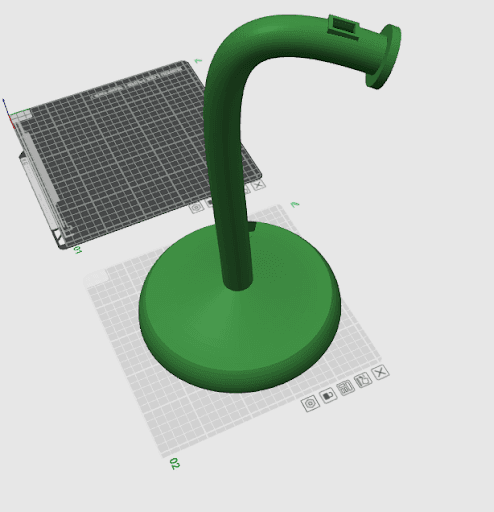
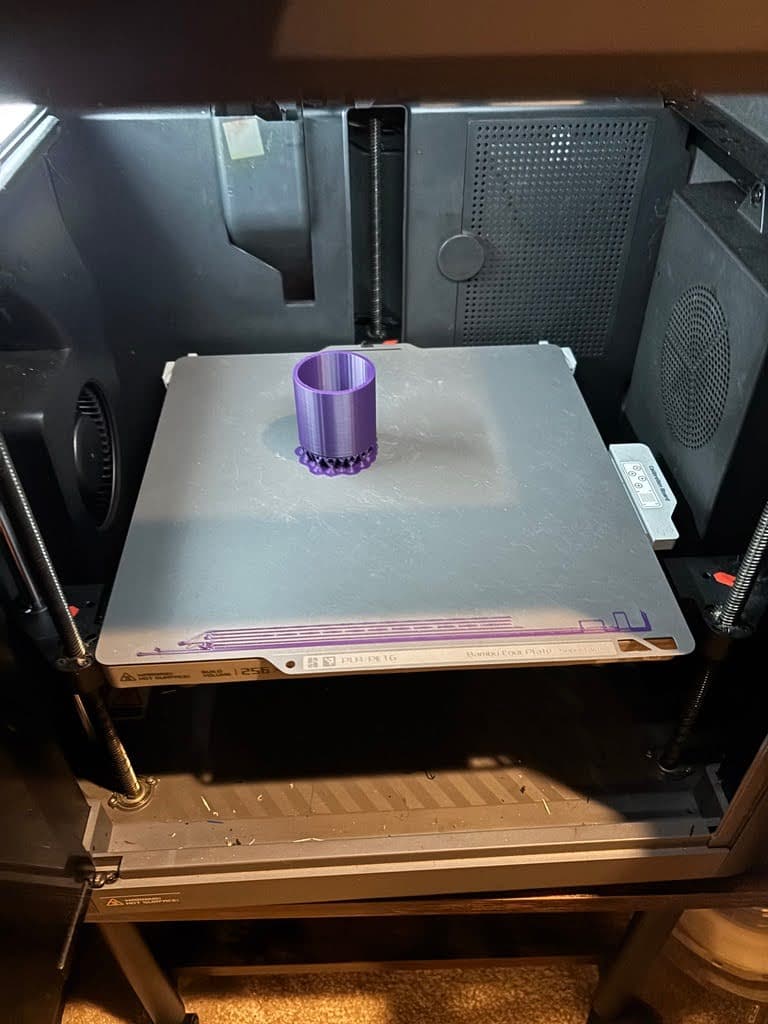
Begin by loading the base and arm assembly into your slicer software (such as Bambu Studio). Split the assembly into individual parts using the dovetail connectors. It's critical that the shear planes (of the dovetail connectors) are not aligned with the bending direction of the arm to ensure structural integrity. Use 100 micron tolerances for the connectors to achieve a snug press-fit connection.
To maximize material efficiency, locate nearly-empty filament spools in your fabrication lab. Use the remaining mass slider on each spool to estimate available filament, then assign different colored spools to different body sections based on their mass requirements (use Bambu Slicer's predicted filament usage to guide this).
Print the base at 80% infill for stability and the arm components at 20% infill to reduce weight while maintaining strength. The lightbulb adapter should be printed separately at 20% infill using tree supports to accommodate the inward flange geometry.
Fabricate the Petal Cone
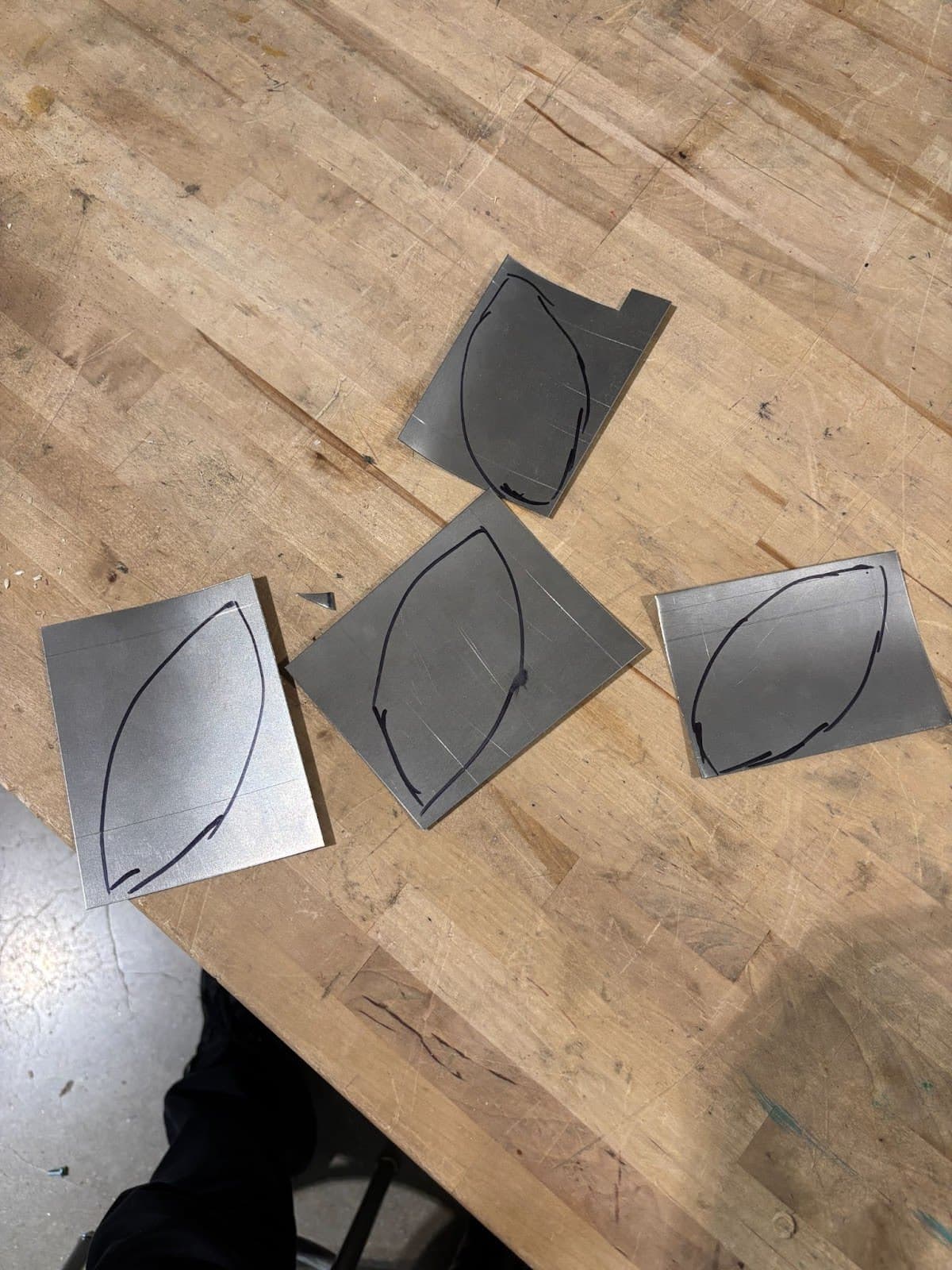
Source leftover sheet metal from your fabrication shop (Northwestern Prototyping Lab, in our case). Look for scrap pieces near the arbor presses and sheet metal shear equipment. You'll need approximately eight pieces of 2" × 6" rectangular sheet metal cutouts for the petals.
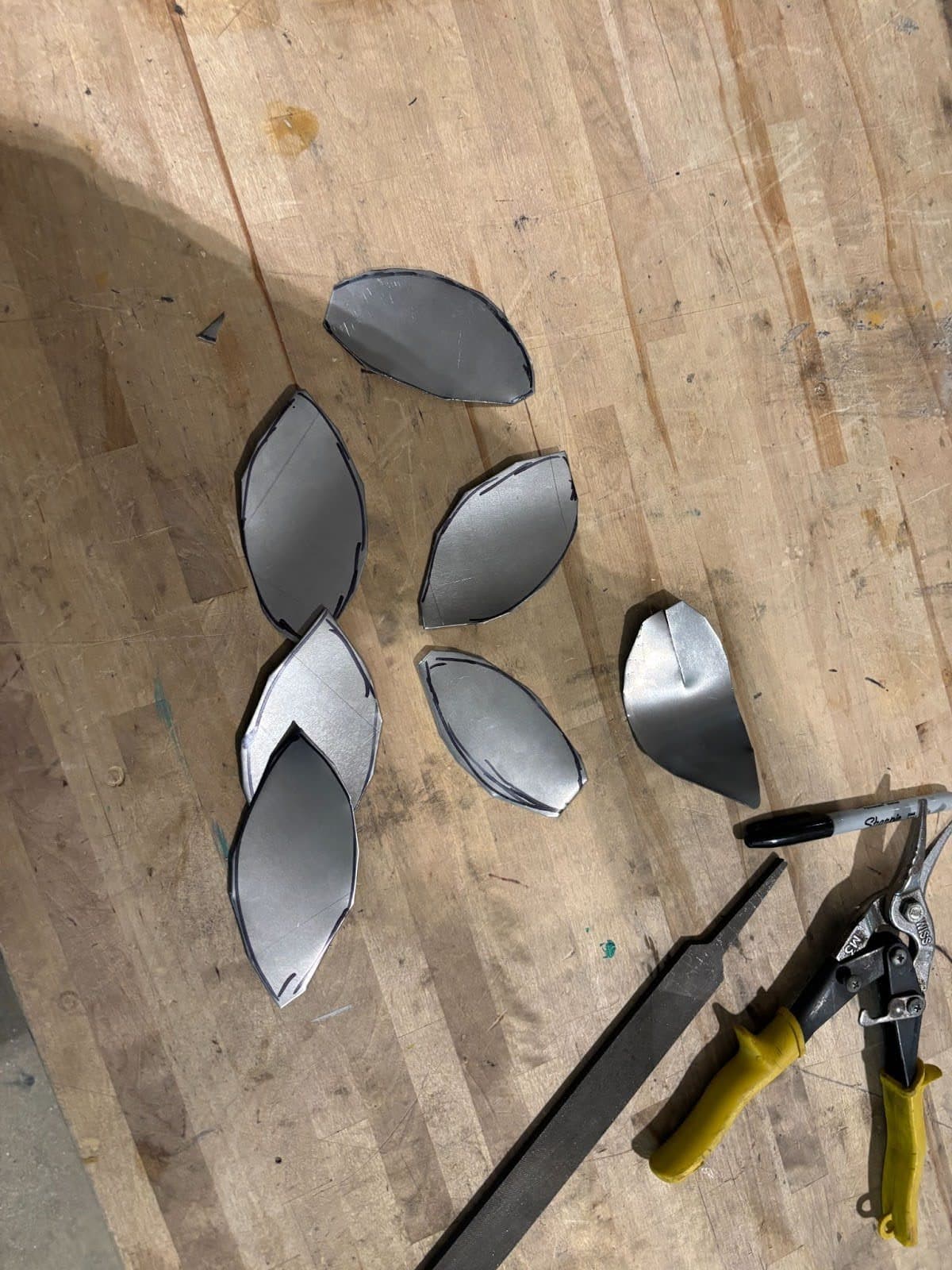
Using a marker or metal scribe, sketch rough petal patterns onto each sheet metal piece. The shapes should be organic and leaf-like. Cut out the rough contours using a throatless shear tool, which allows you to make curved cuts easily.
Refine the petal edges using a belt sander to remove sharp points and create smooth curves. Wash all petals thoroughly with soap to remove dust and oils. This prepares the surface for proper solder bonding and subsequent welding.
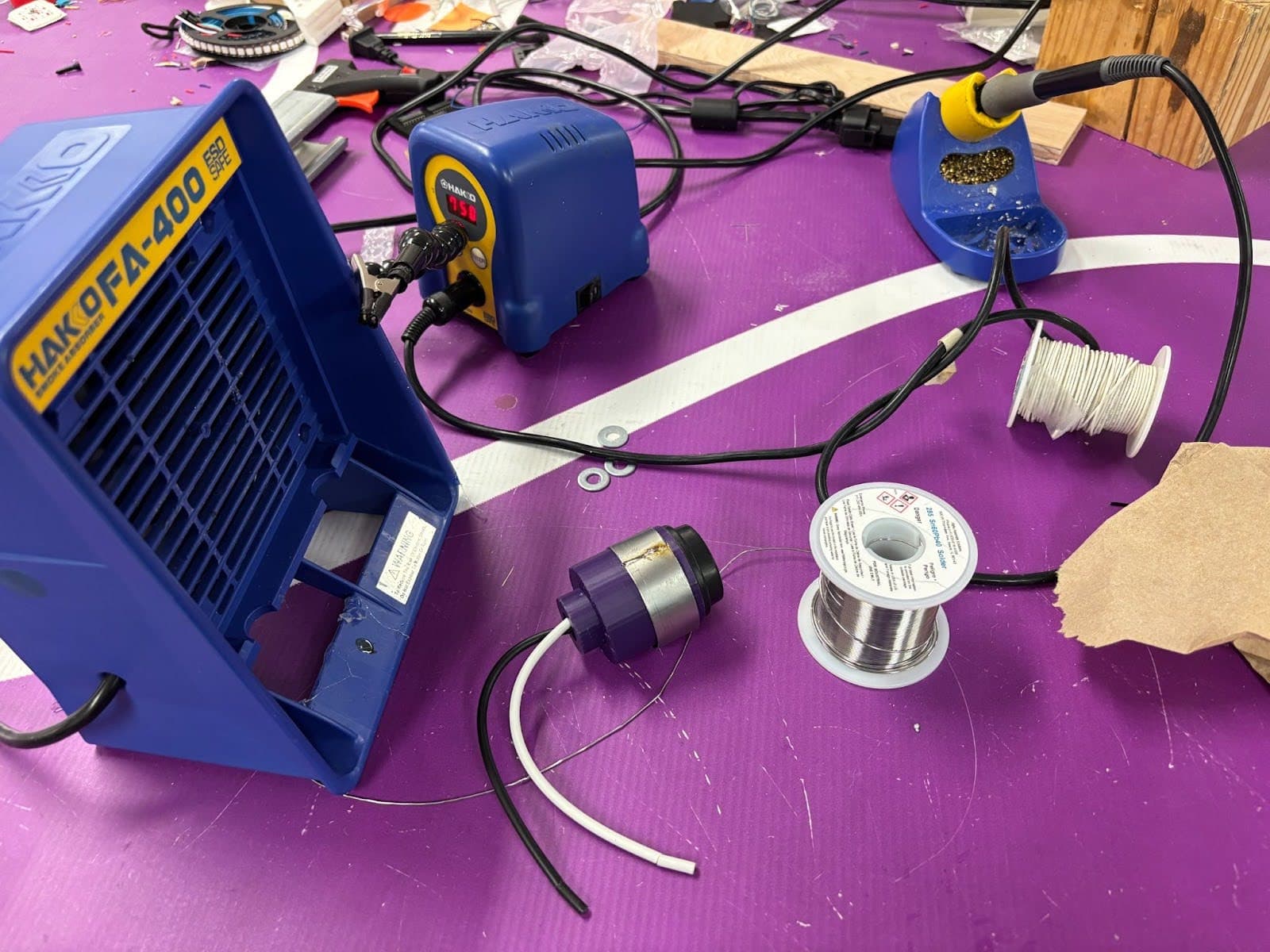
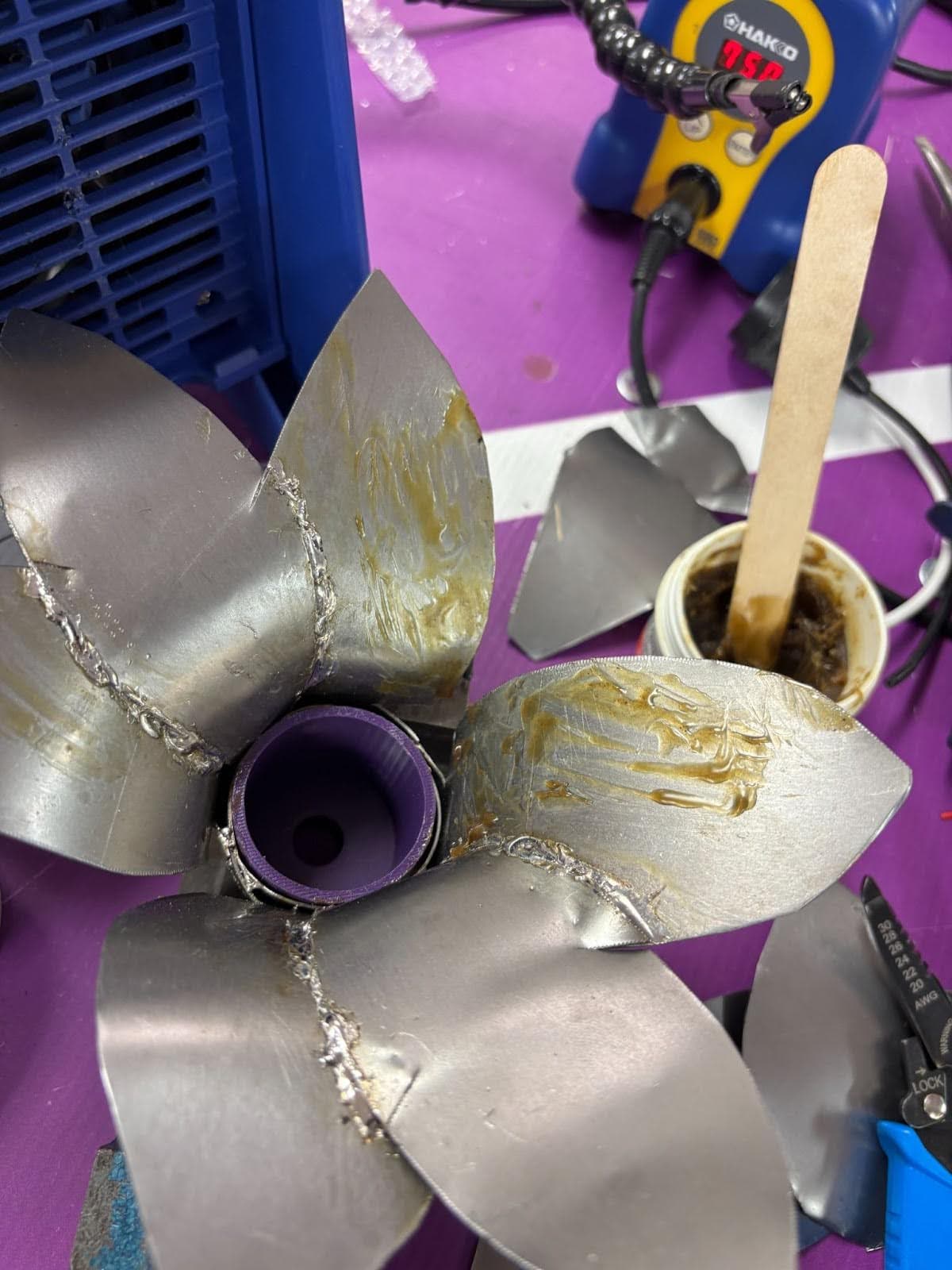
Create a collet by bending a rectangular piece of sheet metal around the lightbulb adapter. This collet serves as the mounting point for all petals. Set your soldering iron to 750°F and prepare solder flux to remove oxidation from the metal surfaces.
Safety first: Use a fan to ventilate your workspace, as solder fumes are toxic. Apply flux to the collet interface and solder it closed to form a ring that fits snugly around the adapter.
Clamp each petal to the collet one at a time to hold it in position. Apply flux to the bonding surface, then solder the petal to the collet. Repeat this process for all petals, ensuring that adjacent petals are also bonded to each other for added strength. If needed, you can TIG weld the petal edges using 50A amperage and 20 CFH argon gas flow for additional reinforcement.
Wire the Electrical Components
Safety Warning
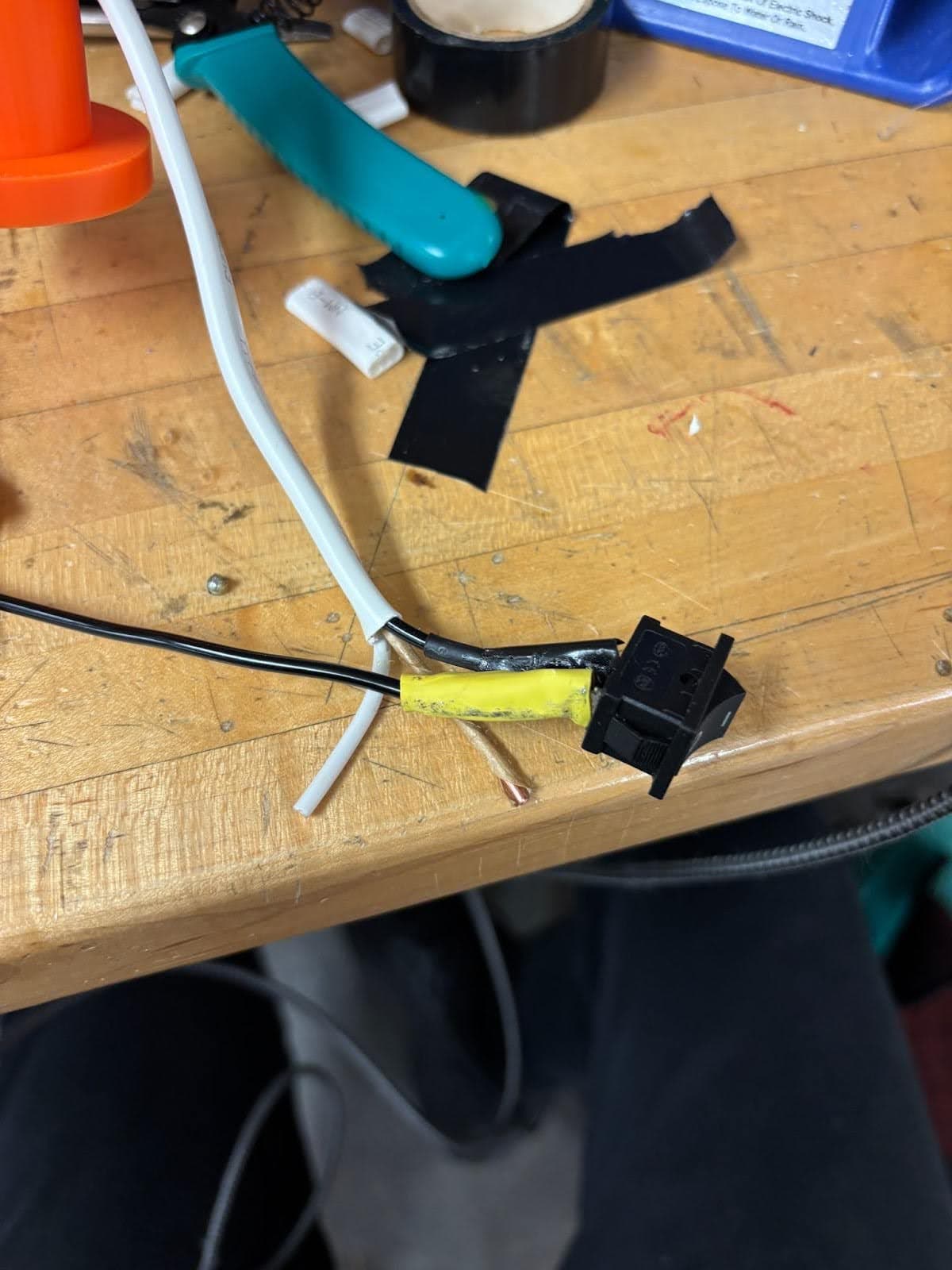
When working with high voltage AC circuits, ensure that no current is active during assembly. Use an AC voltage tester if available. All metallic terminals must be properly insulated with heat shrink wrap, and electrical tape should be used for additional insulation if necessary.
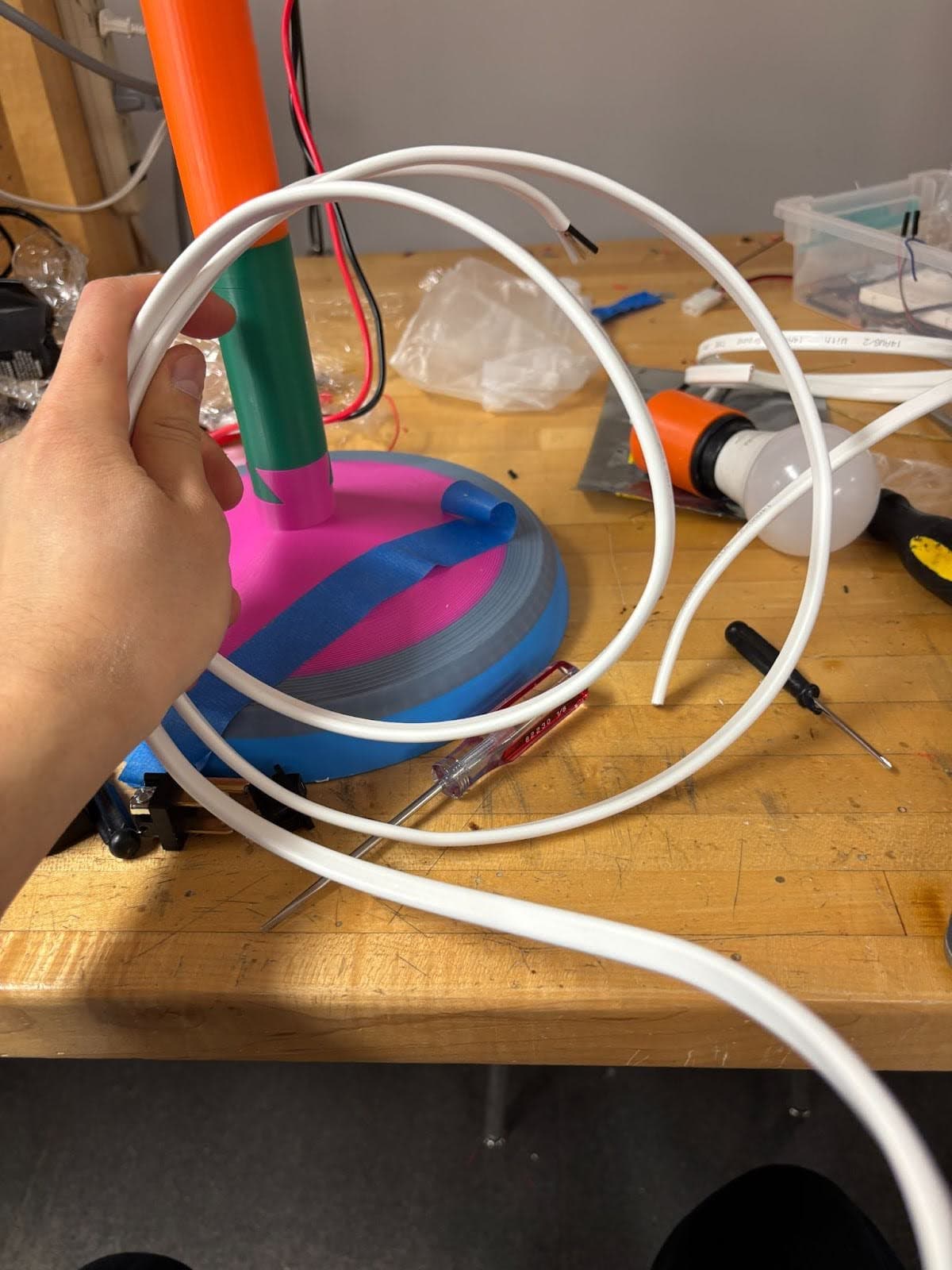
Cut approximately 6 feet of 14/2 gauge AC wire. Splice one end to expose the hot (black), neutral (white), and ground (green or bare copper) wires. Since the lightbulb holder has no ground capability, trim off the ground wire.
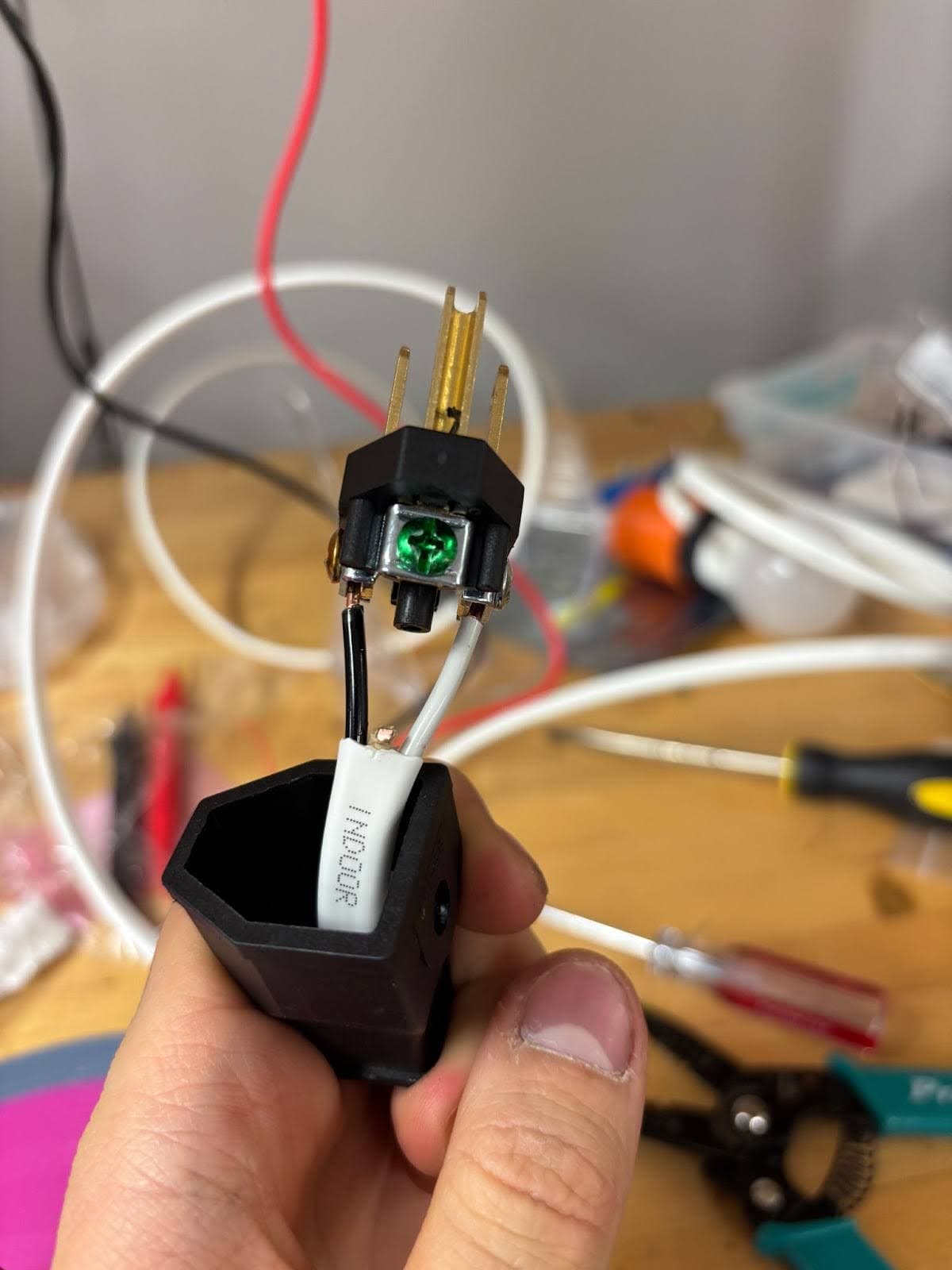
Feed the spliced end through an outlet plug. Attach the neutral wire to the silver screw terminal and the hot wire to the gold screw terminal. Close the outlet plug and secure it with the retaining set screw.
Thread the other end of the wire through the base of the lamp and up through the arm. Splice this end and curve the exposed wire ends in preparation for soldering to the SPDT switch.
Solder the hot wire to the SPDT switch, then slide heat shrink wrap over the connection and apply heat to seal it. This provides critical insulation for the high-voltage connection.
Feed the soldered wires through the end of the arm, pressing the SPDT switch into its designated holster as a press-fit connection. Finally, connect the exposed hot and neutral wires to the lightbulb holder terminals to complete the electrical circuit.
Once all components are assembled, insert a 60W lightbulb (800 lumens) into the holder, attach the petal cone to the adapter, and test the lamp in a safe environment before regular use.